
 |
 |
|
 |
“With a classroom of my own, I knew that I wanted to create a space in which children would learn to work together, share materials, and have opportunities to hold rich conversations that would further their learning and foster independence. I’ve used photographs in my book to show how I set up centers in my classroom and to help you see how I use routines and procedures to support children’s independent use of the centers.”
–Nikki Campo-Stallone |
|
Classroom Layout for Literacy Centers
The diagram shows the layout of a classroom implementing literacy centers. There are five color-coded student tables, each seating 4–6 children with an assigned seat. At center time, four student tables become centers and six others are set-up in different areas of the classroom.
Rollover the centers below to learn more. Click on each center to explore it in greater detail.
Rollover the centers below to learn more. Click on each center to explore it in greater detail.


  |
Reading Area Buddy Reading Buddy pairs reading is an important part of any literacy program. Independent Reading This center includes lots of books with a range of reading levels to encourage reading independently. |

 |
Listening Center At the Listening Center, children listen to books on tape as they follow along in the text. |
 |
Poetry Center Children respond to poems read during shared reading and practice reading the poems on their own. |
| Magnetic Wall This instructional tool can be used for a variety of activities to support word study. |
 |
Overhead Center Students enjoy using transparencies on the overhead projector to revisit poems learned and to practice high frequency words. |
 |
Art Center Provides opportunities to strengthen fine-motor skills and to develop illustrating capabilities. |
 |
Writing Center Children use themed stationery, storytelling bags, and engaging photographs as ways to motivate writing at the writing center. The area highlighted grey illustrates the Supplies Shelf (see below) where these Center Materials are stored. |
 |
ABC (Word Study) Center This center provides a place for children to practice any word study lessons previously taught. |
|
Guided Reading Center Students use this center to review poems and other reading activities using transparencies. |
Center Materials
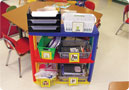
Supplies Shelf
Center supplies are stored on a shelf next to the table along with students’ other supplies. Each table is assigned a color with all of materials and supplies color-coded for that table. This ensures that materials are easy to find and returned to the right table.
Center supplies are stored on a shelf next to the table along with students’ other supplies. Each table is assigned a color with all of materials and supplies color-coded for that table. This ensures that materials are easy to find and returned to the right table.
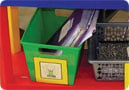
Writing Folder Crates
Each table has a crate that holds writing workshop folders. The crate is labeled with the table color. Each folder is clearly labeled with the writing workshop icon and each child’s name.
Each table has a crate that holds writing workshop folders. The crate is labeled with the table color. Each folder is clearly labeled with the writing workshop icon and each child’s name.
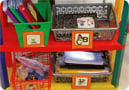
Notebook Basket
Each table has baskets to house each type of notebook children use. The notebooks are easy to access and distribute when needed.
Each table has baskets to house each type of notebook children use. The notebooks are easy to access and distribute when needed.
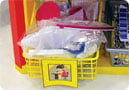
Storytelling Basket
Have children create a storytelling bag with photos and items from home at the beginning of the year. The items in these bags will be used to help spark writing ideas.
Have children create a storytelling bag with photos and items from home at the beginning of the year. The items in these bags will be used to help spark writing ideas.
Table Jobs
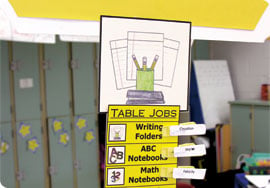
“ I find it helpful for children at each table to have clearly defined jobs. Having jobs fosters a sense of responsibility. The jobs rotate weekly so that every child has the opportunity to try each one. I attach a laminated list of jobs to the bottom of the colored sign hanging above the table and use clothespins with children’s names to indicate job assignments. ”
—Nikki Campo-Stallone
Writing Folder Job
This student passes out and collects the writing folders for the table during writing workshop.
This student passes out and collects the writing folders for the table during writing workshop.
Word Study Notebook Job
This student passes out and collects the word study notebooks for the table when needed.
This student passes out and collects the word study notebooks for the table when needed.
Math Notebook Job
This student passes out and collects the math notebooks for the table when needed.
This student passes out and collects the math notebooks for the table when needed.
Bucket Organizer Job
This student keeps the supply buckets neat and organized. The student also checks to make sure caps are on the markers and glue.
This student keeps the supply buckets neat and organized. The student also checks to make sure caps are on the markers and glue.

 Previous
Putting Center Routines in Place
Calling Reading Groups
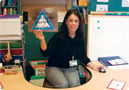 As children work independently at centers, I work with the guided reading group. Guided reading groups are flexible and groups change as children’s needs change. To get the attention of my class in a way that is not too intrusive, I ring a soft bell. When children hear the bell they put their eyes on me. I then hold up a reading group calling card that lists the names of children who will be meeting with me. When students see their name, they clean up their work and join me at the table.
As children work independently at centers, I work with the guided reading group. Guided reading groups are flexible and groups change as children’s needs change. To get the attention of my class in a way that is not too intrusive, I ring a soft bell. When children hear the bell they put their eyes on me. I then hold up a reading group calling card that lists the names of children who will be meeting with me. When students see their name, they clean up their work and join me at the table. Asking Questions
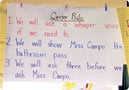 During center time, children may have questions related to a center activity. In order to minimize interruptions, I encourage children to “ask three times before you ask me.” This means that children ask three classmates before coming to me. Having this routine in place allows children to use one another as a resource. Of course, emergencies are always the exception to this rule!
During center time, children may have questions related to a center activity. In order to minimize interruptions, I encourage children to “ask three times before you ask me.” This means that children ask three classmates before coming to me. Having this routine in place allows children to use one another as a resource. Of course, emergencies are always the exception to this rule! Bathroom Use Rules
 I want children to make me aware of their need to use the bathroom. I clearly explain the steps I want them to follow: 1) find a buddy, 2) get the bathroom pass, and 3) show me the pass. If I am working with a guided reading group, they need to make sure that I acknowledge them with a nod before they leave the classroom. This procedure allows children to communicate their needs to me without interrupting others’ work.
I want children to make me aware of their need to use the bathroom. I clearly explain the steps I want them to follow: 1) find a buddy, 2) get the bathroom pass, and 3) show me the pass. If I am working with a guided reading group, they need to make sure that I acknowledge them with a nod before they leave the classroom. This procedure allows children to communicate their needs to me without interrupting others’ work. Managing Noise Levels
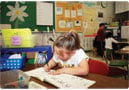
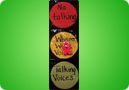 It is important to be clear with children about noise levels in the classroom. One routine I introduce to students involves helping them develop an understanding of “whisper work voices.” Some centers require mostly silence, while others require cooperative learning that may include some conversation. Children need to be aware of the volume of their voice so that other students in the class can concentrate and focus. I model what a whisper work voice sounds like and have children practice speaking in a whisper work voice to ensure their understanding.
It is important to be clear with children about noise levels in the classroom. One routine I introduce to students involves helping them develop an understanding of “whisper work voices.” Some centers require mostly silence, while others require cooperative learning that may include some conversation. Children need to be aware of the volume of their voice so that other students in the class can concentrate and focus. I model what a whisper work voice sounds like and have children practice speaking in a whisper work voice to ensure their understanding.