        |
|
 |
Prehistoric Pueblos explorers |
|
Canyon Rock Art explorers |
 |
 |
|||
|
 |
|
|
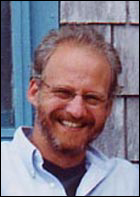
He has been studying Native American cultures for over 30 years, and has worked with tribal communities in many areas of the United States, including the Southwest and the Pacific Northwest on protection of rights and environmental issues. Liebow believes that anytime you have an environmental problem, it's also a people problem. As he explains, "If you were simply to apply a scientific or engineering solution, you would be leaving out a very important element of the equation, which is building 'social relationships' among people from different backgrounds and beliefs" to reach agreement. Liebow sees the Oral History project as a way of helping Native Americans, fishers, farmers, and others in the Skagit River Valley hear each other's stories, identify the values they share in common, and hold on to what they feel is important in making decisions about the future of their area. Liebow first got interested in Native American cultures as a kid, growing up in a multicultural neighborhood on the north side of Chicago. He recalls, "I was introduced to recent immigrants from all over, especially Eastern Europe and Latin America. There were also a number of Indians — Navaho families from Arizona, and Cherokees from Oklahoma, relocated to Chicago by the U.S. government. I was curious how people from different places could maintain their cultural identities. An anthropology course in high school gave me a way to think and talk about cultures."
Liebow went on to college to major in sociology and anthropology and then to graduate school at Arizona State University for MA and Ph.D. degrees in Anthropology.
|
|||
She recalls that reading Gerald Durrell's books on animals hooked her curiosity about the natural world. She was about 10 years old at the time. Later, she majored in biology and environmental studies as an undergraduate.
Breslow is working on a Ph.D. degree in environmental anthropology at the University of Washington. She recently completed a field work study, interviewing Skagit Valley farmers about agricultural policy to protect the Skagit River, an initiative that led to the idea of the Oral History project on Fishing the Skagit River.
|
|||
 |
|
||