        |
|
 |
Canyon Rock field sites |
|
Prehistoric Pueblos field sites |
 |
 |
||||
|
 |
|
||
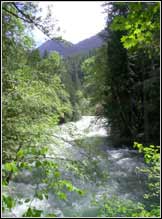
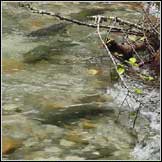
The Skagit River is the largest river in western Washington State, flowing over 125 miles from glaciers in the Canadian Cascade Mountains range through old growth forests and farmlands to the marshy inlets of Puget Sound, Washington. It is one the very few rivers, outside of Alaska and Canada that still has all five of its original salmon species. The tiny salmon hatch from eggs in upstream waters, and travel hundreds of miles downstream to the Pacific Ocean. In tidal inlets where saltwater meets freshwater the salmon become seagoing, preparing to journey thousands of miles in the open ocean. Within one to seven years these same salmon will return to the marshes to complete the final portion of their life journey when they swim upstream to reproduce near where they were born, and die. Their fleshy remains feed eagles and other animals that inhabit the river banks. The salmon are an essential part of the watershed's food chain. For years Native Americans have fished the inland waterways and the nearshore bays of Puget Sound. They have depended on salmon both for food and economic livelihood. The seasonal rhythms of salmon migrations are deeply embedded in their traditions and spiritual beliefs. In fact, Swinomish, the name one of the local tribes, means "salmon people." Today, the valley is home to three Indian tribes, the Swinomish, the Sauk-Suiattle, and the Upper Skagit. The Swinomish, whose reservation is the largest, is located at the mouth of the Skagit River near the town of La Conner. The Sauk-Suiattle and Upper Skagit reservations are at higher elevations in the upland regions of the valley. Native Americans are a small part of the total population. Many other people have been moving to the valley, and the numbers of people have doubled in the last 30 years. The valley's beauty and its closeness to Seattle have spurred the growth of homes, pavement, and shopping malls. What does the increase in population mean for the salmon? At one time salmon were plentiful. Today, salmon populations are declining. Several species are endangered. Why? The reasons are complex. Some say over-fishing . Others say farming, logging, or hydroelectric dams are to blame. Different groups blame each other. Dr. Liebow believes that environmental problems are "people" problems, and that recording people's stories about the past will help them reach agreement on what they value, and how to work together in restoring the river and its precious fishing resources. "History," says Dr. Liebow. "can be our teacher in showing the way forward." |
||||
 |
||||